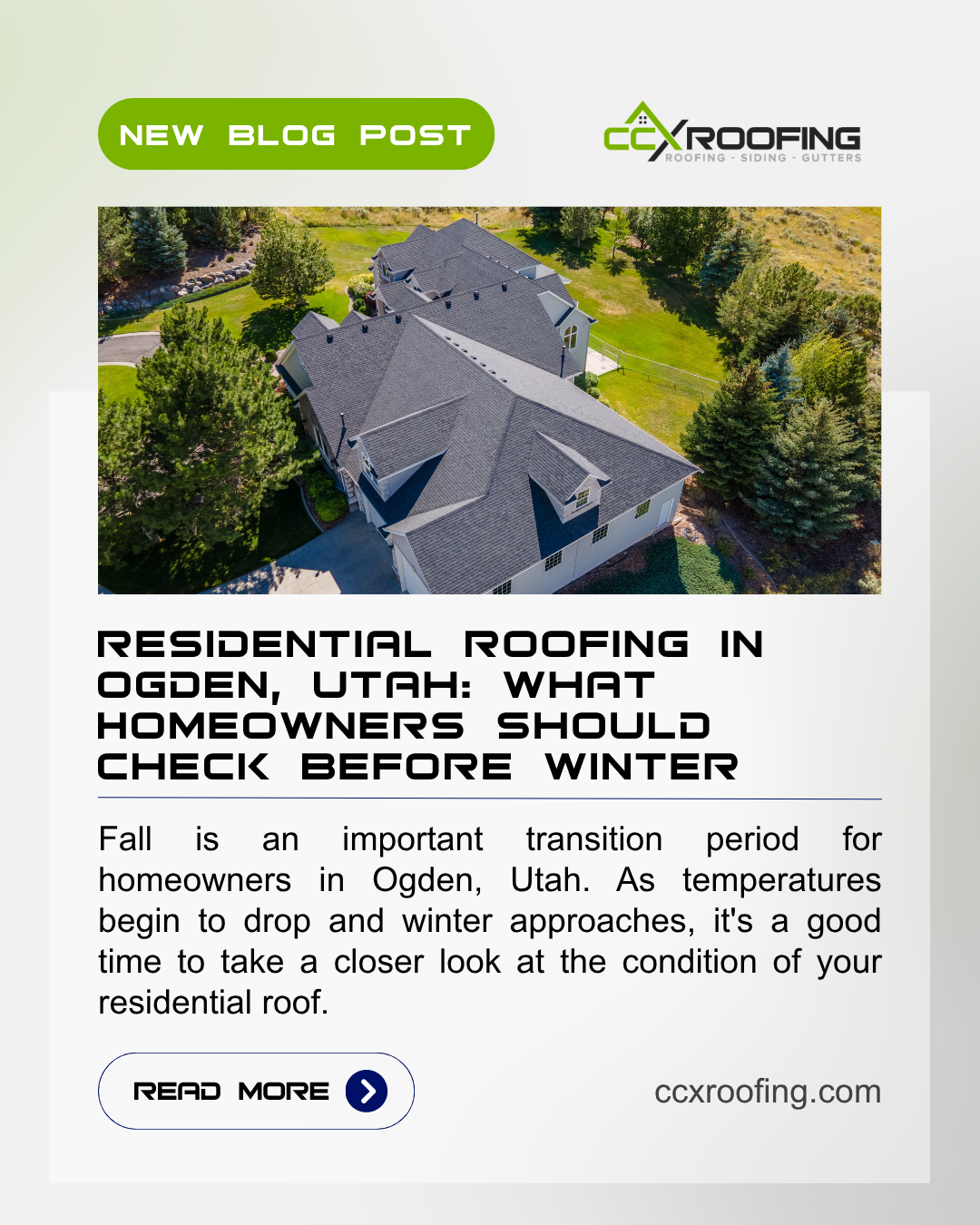
Fall is an important transition period for homeowners in Ogden, Utah. As temperatures begin to drop and winter approaches, it’s a good time to take a closer look at the condition of your residential roof.
Your roof protects your home from changing weather throughout the year, but problems that seem minor during the warmer months can become more difficult to manage once winter arrives.
Damaged shingles, worn flashing, clogged gutters, and small leaks are all examples of issues that may deserve attention before colder weather sets in.
For Ogden homeowners, a fall roof check is less about expecting problems and more about being proactive about protecting your home and your investment.
A residential roof is designed to handle changing weather conditions, but its ability to do so depends on its overall condition.
By the time fall arrives, your roof has already experienced months of exposure to sun, wind, rain, and temperature changes. That makes fall a useful time to ask:
Is my roof ready for the months ahead?
Identifying potential problems before winter gives homeowners an opportunity to address them before weather conditions make repairs more complicated.
A small repair in the fall may be considerably easier to manage than an unexpected roofing problem during the middle of winter.
Start with the most visible part of your residential roof.
Look for signs such as:
You don’t need to climb onto the roof to look for these signs.
A visual inspection from the ground can help identify obvious concerns, while a professional roof inspection can provide a closer assessment of the roofing system.
Roof flashing helps protect areas where different surfaces meet or where structures penetrate the roof.
This can include:
Because these areas can be vulnerable to water intrusion, damaged or deteriorated flashing should not be overlooked.
A roof may look perfectly fine from the street while still having an issue around one of these areas.
One of the most important things homeowners can look for is evidence that water may already be getting into the home.
Inside, check for:
A small water stain doesn’t necessarily tell you exactly where the problem originates.
Water can travel along roofing materials and structural components before becoming visible inside the home.
That’s why addressing the source early is important.
Your gutters are an important part of your home’s drainage system.
Before winter, make sure they’re free of excessive leaves and debris and check for obvious problems such as:
A properly functioning drainage system helps move water away from the roof and the home’s foundation.
For homeowners preparing their property for winter, gutters should be part of the overall roof maintenance checklist.
Sometimes the best clues about the condition of your roof are found inside the home.
Take a look at your attic for:
Attic conditions can also provide information about ventilation and moisture management.
If something looks unusual, a professional residential roofing inspection can help determine whether the issue is connected to the roof or another part of the home’s exterior.
Fall is also a good time to think about your roof beyond individual damaged shingles.
Consider:
How old is the roof?
Has it required repeated repairs?
Has it experienced significant weather exposure?
Have you noticed leaks or other recurring problems?
Age alone doesn’t determine whether a roof needs to be replaced. However, an older roof combined with visible deterioration or recurring issues may deserve a more thorough evaluation.
Knowing where your roof stands before winter can help you make decisions based on its actual condition rather than reacting to an emergency.
One common misconception is that a roof is simply the shingles you can see from the ground.
In reality, a residential roofing system includes multiple components working together to protect the home.
These can include:
A problem with one component can sometimes affect the performance of others.
That’s why a professional inspection can be valuable when a homeowner notices something unusual or wants a better understanding of the roof’s overall condition.
Home maintenance isn’t always exciting, but it can have a meaningful impact on long-term costs.
A homeowner who addresses a small roofing issue early may avoid dealing with a much more extensive problem later.
For example, a damaged shingle may be relatively simple to address. If moisture enters the roofing system and remains undetected, the resulting damage may involve additional materials or areas of the home.
This is why residential roof maintenance can be viewed as protecting an investment rather than simply spending money on repairs.
Your roof protects everything beneath it.
Taking care of the roof means taking care of the home.
For homeowners in Ogden, fall is an opportunity to prepare the home before winter conditions become more challenging.
Rather than waiting for the first significant snowfall or discovering a leak during freezing temperatures, homeowners can use the fall season to:
This approach doesn’t mean that every homeowner needs a roof replacement.
In many cases, the purpose of a fall inspection is simply to understand the condition of the roof and address issues before they become more serious.
Consider scheduling a professional residential roof inspection if you’ve noticed:
You don’t have to wait until there’s an obvious emergency.
If you’re uncertain about the condition of your roof, an inspection can give you a clearer picture and help you determine what, if anything, needs attention.
The best time to discover a roofing problem is generally before it becomes an emergency.
For Ogden homeowners, fall provides a practical opportunity to evaluate the condition of a residential roof, address minor concerns, and prepare the home for the colder months ahead.
Your roof is one of the home’s first lines of defense against the elements.
Taking care of it before winter is an investment in protecting the home you already worked hard to own.
If you’re a homeowner in Ogden, Utah, and you’re unsure whether your residential roof is ready for winter, CCX Roofing can help you evaluate its condition and identify areas that may need attention.
Homeowners should look for damaged or missing shingles, deteriorated flashing, signs of water intrusion, clogged gutters, and moisture in the attic. A professional inspection can identify problems that aren’t obvious from the ground.
Fall is a practical time to inspect a residential roof because it allows homeowners to identify potential problems before winter weather arrives.
Signs can include missing or damaged shingles, recurring leaks, water stains, damaged flashing, sagging areas, and significant visible deterioration. A professional inspection can help determine whether repair or other action is appropriate.
Yes. A small leak can allow moisture to enter areas beneath the roofing materials. If it remains unresolved, the resulting damage may become more extensive.
Not automatically. Roof replacement depends on factors such as the roof’s age, condition, extent of damage, and repair history. An inspection can help determine whether maintenance, repair, or replacement makes sense.
Start with the roof and drainage system. Inspect the roof for visible damage, check gutters and downspouts, look for signs of leaks, inspect the attic for moisture, and address potential problems before winter conditions arrive.