
When homeowners notice missing shingles, leaks, or visible wear, one of the first questions they ask is: Should I repair my roof, or is it time to consider a replacement?
It’s an important decision. Choosing the right solution can help protect your home, manage long-term maintenance costs, and prevent existing roofing problems from becoming more extensive.
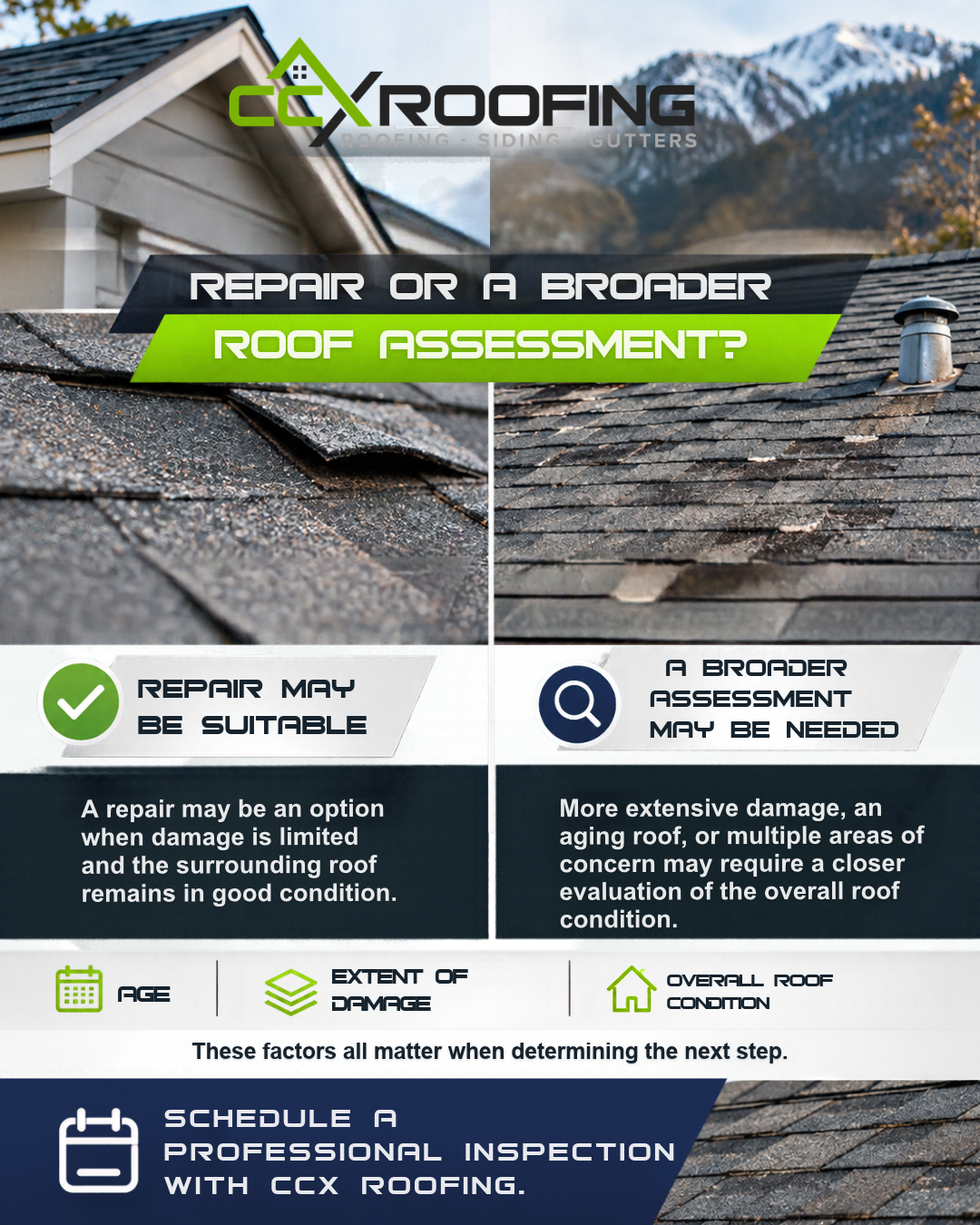
However, there isn’t one answer that applies to every roof. A localized issue may be suitable for a targeted repair, while widespread damage or an aging roofing system may require a broader assessment.
Understanding the factors that influence this decision is the first step toward making an informed choice.
The age of your roof is one of the factors professionals consider when evaluating its condition.
As roofing materials age, they may become more susceptible to weather exposure, deterioration, and recurring maintenance issues. Even if a roof appears to be in relatively good condition from the ground, its materials may have experienced years of wear.
A newer roof with isolated damage may be a candidate for a localized repair, depending on the surrounding materials and installation condition.
An older roof, particularly one showing several signs of deterioration, may require a more comprehensive evaluation.
What should homeowners consider?
Roof age alone does not determine whether replacement is necessary. It should always be considered alongside the roof’s current condition.
Not all roof damage is the same.
A few missing or damaged shingles may represent a localized issue. However, damage affecting multiple sections of the roof could indicate a more extensive problem.
Some common roofing concerns include:
Missing or damaged shingles
Shingles that are missing, cracked, curled, or displaced can leave underlying roofing components more exposed to moisture and weather.
Damaged flashing
Flashing protects vulnerable areas around chimneys, vents, and other roof penetrations. When it becomes damaged or deteriorated, water may find its way into the roofing system.
Recurring leaks or interior water stains
Water stains on ceilings or walls may indicate moisture intrusion. However, plumbing problems and condensation can produce similar symptoms, so the source should be properly identified.
Widespread deterioration
When several roofing areas show signs of wear, a professional may need to evaluate the entire system rather than focus on individual visible problems.
The important distinction is whether the damage is limited to one area or reflects a broader condition affecting the roof.
A roof is a complete system. Its performance depends on more than the condition of individual shingles.
During an inspection, a roofing professional may evaluate:
This broader evaluation helps determine whether the concern appears isolated or whether additional areas need attention.
For example, repairing a damaged section may be a reasonable option when the surrounding roofing materials are in suitable condition. But if several sections show deterioration, addressing only the most visible problem may not resolve the underlying concerns.
That is why a professional assessment matters before deciding on a course of action.
A targeted repair may be appropriate when the damage is limited, the surrounding roofing materials remain in good condition, and the affected area can be properly addressed.
Examples may include:
However, these examples do not automatically mean a repair is the correct solution. The roof’s age, material condition, and any underlying damage must also be considered.
A professional inspection can help establish whether a localized repair is a reasonable option.
Some roofing concerns require a closer look at the entire system.
A broader assessment may be appropriate when:
In these situations, a professional may need to evaluate whether additional repairs, more extensive work, or a roof replacement should be considered.
A broader assessment does not automatically mean a replacement is necessary. Its purpose is to understand the full condition of the roof and identify the available options.
One of the most common mistakes homeowners can make is deciding what their roof needs based only on what they can see.
Some roofing problems are visible from the ground, but others may involve concealed moisture, deteriorating components, or damage that cannot be accurately evaluated from a distance.
A professional roof inspection helps identify visible concerns, assess affected areas, and determine whether further evaluation is necessary.
It also provides a clearer basis for discussing possible solutions before committing to a repair or replacement project.
Remember: A roof inspection is not simply about finding damage. It’s about understanding the condition of the roofing system so the next decision is based on evidence.
Choosing between roof repair and a broader roofing solution depends on three important factors: the roof’s age, the extent of the damage, and its overall condition.
A localized issue may be suitable for a targeted repair, while widespread deterioration or recurring problems may require a more comprehensive assessment.
There is no reliable way to determine the right solution without evaluating the roof itself.
At CCX Roofing, we believe homeowners should have a clear understanding of their roofing concerns and the options available to address them.
If you’ve noticed missing shingles, damaged flashing, recurring leaks, or other signs of deterioration, consider scheduling a professional roof inspection.
Contact CCX Roofing today to take the next step toward understanding your roof’s condition.
A repair generally involves a smaller scope of work, but the overall cost depends on the type and extent of damage, materials, accessibility, and labor. Repeated repairs may also add up over time. A professional assessment can help homeowners compare appropriate options.
Signs such as widespread shingle deterioration, recurring leaks, extensive damage, and an aging roofing system may indicate that a broader assessment is needed. These signs do not independently confirm that replacement is necessary. An inspection is needed to evaluate the roof’s condition.
Yes. Even relatively new roofing systems can experience localized damage from severe weather, installation issues, or other factors. The appropriate response depends on the cause and extent of the problem.
Inspection frequency depends on the roof’s age, materials, condition, and exposure to weather. Homeowners should also consider a professional assessment after significant weather events or when they notice signs of potential damage.
You can look for visible warning signs from the ground, such as missing shingles, debris accumulation, or an uneven roofline. However, climbing onto the roof can be dangerous, and a ground-level observation cannot replace a professional inspection.
Ready to understand what your roof needs?
Don’t rely on guesswork. Contact CCX Roofing to schedule a professional roof inspection and discuss the appropriate next steps for your home.

Website design and support provided by Ljordan Designs


